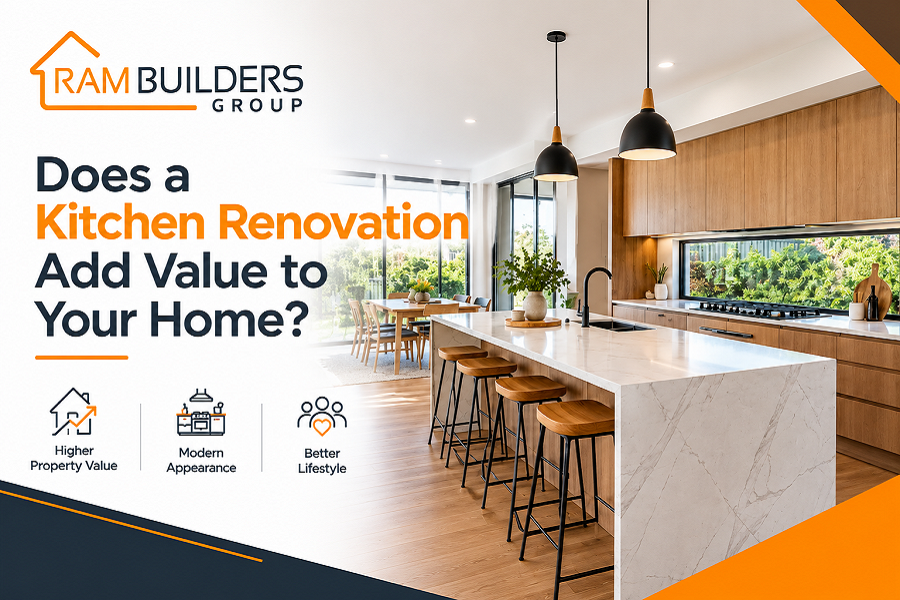
It usually starts with a small thing. A drawer that won’t close. A benchtop that’s seen better days. A Saturday morning spent trying to cook for six in a kitchen built for two.
Then comes the bigger question: if we spend this money, will we actually get it back?
At Ram Builders Group, we hear this from Brisbane homeowners every week. Whether you’re planning to sell next year or stay for the next ten, the question behind kitchen renovations in Brisbane is the same. Is this a smart investment, or just an expensive upgrade?
The honest answer is: it depends. But it depends on things you can control. Let’s walk through them.
The Short Answer: Yes, But Not Automatically
A good kitchen can lift your home’s appeal, help it sell faster and support a stronger price. A poor one can do the opposite. Mismatched finishes, awkward layouts or cheap shortcuts can put buyers off.
Think of it this way. A kitchen renovation rarely returns exactly what you spend. What it does is remove the objections buyers have, and make your home feel finished and ready to move into.
If you’re staying put, the value shows up differently. It’s in daily comfort, better use of space and years of enjoying a room that actually works.
Key Takeaway: A new kitchen rarely returns every dollar you spend. What it does is remove the objections buyers have and make your home feel finished.
Why Kitchens Carry So Much Weight in Brisbane
Brisbane homes are built for living. We cook, entertain and spend a lot of time around the kitchen, especially with our warm climate and love of outdoor dining.
Buyers here tend to look for:
- An open layout that connects to the living area and outdoor space
- A kitchen that handles family life and weekend get-togethers
- Good natural light and ventilation
- Storage that works, not just looks good
- Modern, durable finishes that cope with humidity
If your kitchen is closed off, dated or cramped, it can quietly cap what buyers think your home is worth.
Local example: We often see older Brisbane homes where the kitchen sits at the back, separated from the living area by a wall. Opening that wall and bringing the kitchen into the main space can change how the whole house feels, often more than any single finish.
What Kind of Kitchen Renovation Are You Planning?
Not every renovation needs to be a full rebuild. The right level depends on your home, your goals and your budget.
| Renovation Level | What It Usually Involves | Best For |
|---|---|---|
| Cosmetic refresh | New cabinet doors, benchtops, splashback, tapware and paint | Homes with a sound layout that just look tired |
| Mid-range renovation | New cabinetry, benchtops, appliances and flooring, with the same layout | Families wanting better function without major structural work |
| Full renovation | New layout, plumbing and electrical changes, possible wall removal | Homes where the kitchen no longer suits how you live |
| Extension or custom kitchen | Adding space or building a bespoke design | Larger projects, character homes and long-term family homes |
Tip: If your layout works, you can often get a big visual impact by keeping the footprint and updating what’s around it. Moving plumbing and walls is where costs climb quickly.
What Actually Adds Value
Here are the things that tend to make the biggest difference when a home goes to market.
1. A Smart, Open Layout
Buyers want flow. A kitchen that connects to dining and living areas feels bigger and more social, even if the footprint hasn’t changed much.
2. Quality Benchtops and Cabinetry
These are the first things people touch and notice. Durable stone or engineered benchtops and well-built cabinetry signal quality throughout the home.
3. Generous Storage
Deep drawers, a proper pantry and smart corner solutions matter more than most people expect. Ask any family what they wish their kitchen had, and storage is usually near the top.
4. Good Lighting
A mix of ambient, task and feature lighting makes a kitchen feel modern and warm. It’s one of the more affordable upgrades with a visible payoff.
5. Reliable Appliances
You don’t need the most expensive brands. Buyers just want to see appliances that look current and work well.
6. Durable, Climate-Friendly Finishes
Brisbane’s humidity is tough on poorly made cabinetry. Moisture-resistant materials and good ventilation protect your investment.
Key Takeaway: Layout, storage and solid cabinetry do more for value than expensive finishes. Get those right first.
What Often Doesn’t Add Value
Some upgrades look impressive but rarely pay off.
- Highly personal styles: Bold colours or unusual layouts can narrow your buyer pool.
- Top-end finishes in a mid-range street: If every home on your street sells at a certain level, a luxury kitchen may not lift your price to match.
- Trendy features that date quickly: What’s popular today can look tired in a few years.
- Cutting corners on hidden work: Poor plumbing, wiring or waterproofing can cost far more later than it saved.
A relatable scenario: A homeowner we spoke with had planned a premium kitchen with imported finishes in a home surrounded by modest properties. We talked through their goals, and they adjusted to quality local materials and a better layout. The result looked great, fit their street and left room in the budget for other priorities.
The Over-Capitalising Trap
This is the mistake we see most often.
Over-capitalising means spending more on a renovation than the home’s value can realistically recover. It’s easy to do, because kitchens are emotional. You pick one beautiful thing, then another, and suddenly the budget has doubled.
A simple way to stay grounded:
- Look at recent sales of similar homes in your suburb
- Ask a local agent what buyers in your area expect
- Set a budget range before you start choosing finishes
- Keep a buffer for surprises, usually around 10 to 15 percent
Tip: Spend where it matters most, such as layout, cabinetry quality and benchtops. Save on items that are easy to change later, like handles or décor.
Key Takeaway: Spending more than your street can support is the most common way to lose money on a kitchen. Set your budget against local sales, not just your wish list.
Renovating to Sell vs Renovating to Stay
Your plan changes how you should approach the project.
If you’re selling soon, focus on broad appeal. Neutral palettes, practical layouts and quality materials tend to work best. Avoid anything too personal.
If you’re staying long-term, build around your lifestyle. Think about how you cook, how many people use the space and what drives you crazy about your current kitchen. The value here is daily, and it compounds.
If you’re not sure yet, design for both. A well-made kitchen with classic finishes holds its appeal either way.
Don’t Forget the Practical Side
A kitchen renovation isn’t just design. There’s real building work behind it, and this is where the right team matters.
- Council approvals: Some Brisbane homes, especially older or character-listed ones, may need approvals for certain changes.
- Structural work: Removing walls often involves engineering.
- Plumbing, electrical and gas: Licensed trades are essential, and the work should be certified.
- Waterproofing: Done badly, it causes expensive problems later.
- Living without a kitchen: Plan for temporary cooking arrangements, because it can take several weeks.
How to Choose the Right Kitchen Renovation Builders in Brisbane
The quality of your result depends heavily on who builds it. When you’re comparing kitchen renovation builders in Brisbane, here’s what we’d look at.
Check Licensing and Insurance
In Queensland, builders need the correct QBCC licence, and home warranty insurance generally applies to residential work above a set value. You can look up any builder’s licence on the QBCC website.
Ask for a Detailed Written Quote
A good quote lists what’s included, what isn’t and how allowances are handled. Be cautious about vague quotes with a single lump sum.
Look at Completed Kitchens
Photos help, but ask to speak to past clients. Ask how communication was, whether the project finished on time and how problems were handled.
Find a Team That Handles the Whole Job
A kitchen involves cabinetry, plumbing, electrical, tiling, painting and often structural changes. Renovation builders in Brisbane who manage everything under one roof reduce the chance of delays and finger-pointing between trades.
Pay Attention to Communication
How a builder responds to your questions before you sign is usually how the project will feel once it starts.
Key Takeaway: The right builder protects your budget as much as your design does. Check the licence, read the quote line by line, and talk to past clients.
Why Home Builders in Brisbane Are Often the Better Choice for Renovations
Some people assume a kitchen is a job for a cabinet maker alone. For simple updates, that can work. But when your plans involve moving walls, changing plumbing or reworking the layout, an experienced builder brings structure to the project.
Good home builders in Brisbane understand local conditions, council requirements and how our older homes are put together. That knowledge helps avoid surprises once the walls come off.
At Ram Builders Group, we’d rather talk through your plans honestly, even if that means telling you a smaller project would serve you better.
Quick Checklist Before You Start
- Clear goal: selling, staying or both
- Budget range with a buffer
- Recent local sales checked
- Layout planned around how you actually cook and live
- Builder’s QBCC license and insurance confirmed
- Written quote with a full inclusions list
- Timeline and temporary kitchen plan
- Council approvals checked if needed
A Final Thought from Our Team
A kitchen renovation can absolutely add value, but the biggest returns come from smart decisions, not big spending. Get the layout right. Choose durable materials. Stay realistic about your street and your budget.
If you’re weighing up your options, we’re happy to have a relaxed chat about your home and what might work. You’re welcome to get in touch or fill out the enquiry form at rambuildersgroup.com.au, and our team at Ram Builders Group will help you work out a sensible next step, with no pressure.
Frequently Asked Questions
In most cases, yes, especially if the existing kitchen is dated or poorly laid out. The return depends on your suburb, the quality of the work and how well the design suits buyers in your area. A local agent can give you a realistic view for your street.
Costs vary widely depending on size, layout changes, materials and appliances. A cosmetic refresh costs far less than a full renovation involving plumbing, electrical and structural work. The most reliable figure comes from a detailed quote based on your actual kitchen.
Most kitchen renovations take several weeks from demolition to completion, though larger projects can take longer. Lead times for cabinetry and stone benchtops can also affect the schedule. Ask your builder for a realistic timeline before you start.
It can be, particularly if the kitchen is the main thing holding the home back. A modest, well-finished update usually makes more sense than a high-end overhaul. Check recent local sales first so you spend in line with your market.
A better layout, quality benchtops and good storage usually deliver the strongest appeal. Fresh cabinetry and updated lighting also make a noticeable difference. Neutral, timeless finishes tend to attract the widest range of buyers.
Cosmetic updates generally don’t, but structural changes, extensions or work on character-listed homes may. Requirements depend on your property, so it’s best to check before you start. Your builder can help you work out what applies.
A designer helps with layout and style, while a licensed builder handles construction, approvals and trades. For larger projects, many homeowners work with both, or choose a builder who manages the whole process. Ask what’s included so nothing falls between the gaps.